
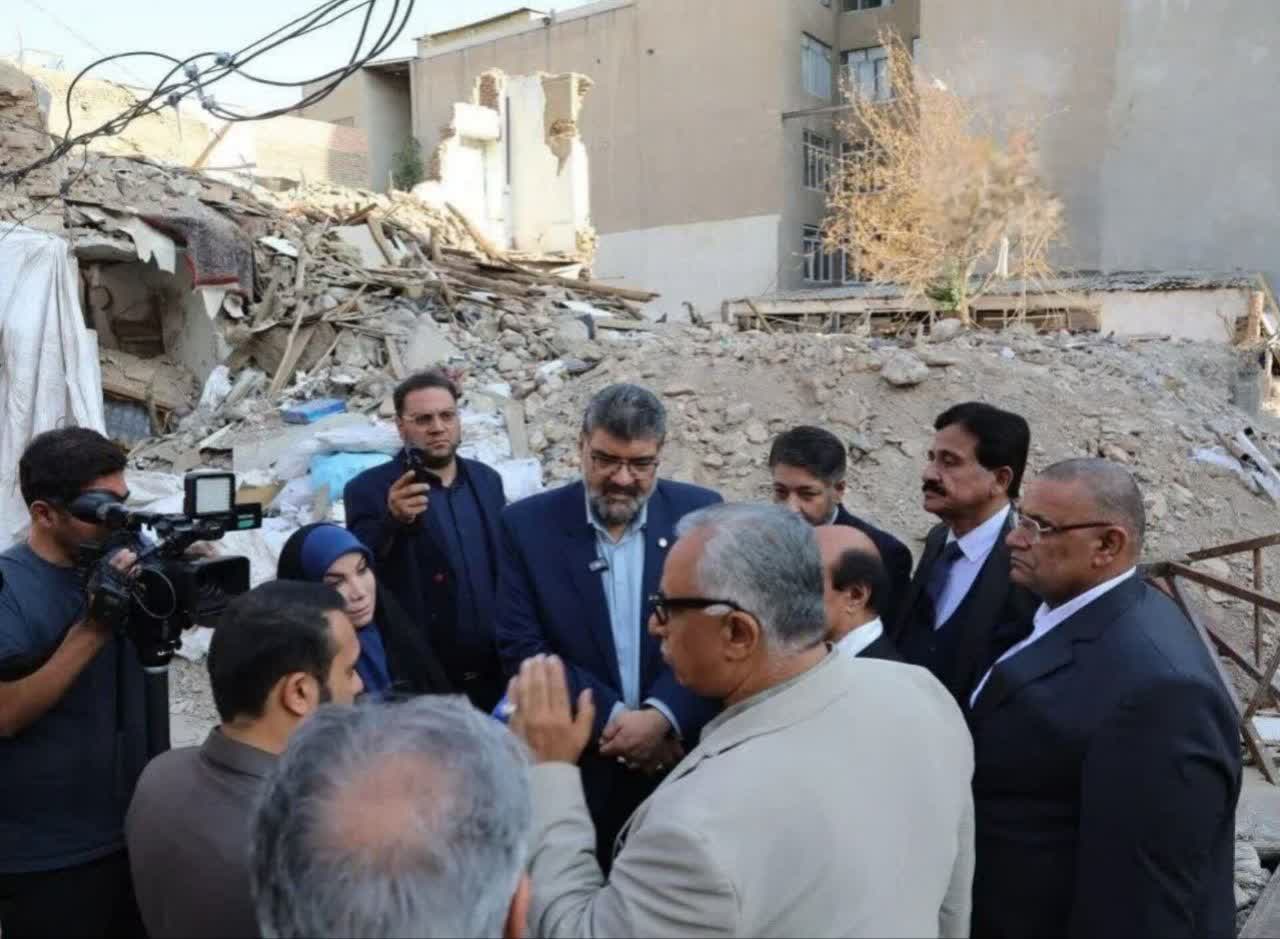
 A lawyer of the Supreme Court of Pakistan, condemning the US and Israeli attacks on Iran, considered the targeting of religious sites and the killing of children as a sign of the perpetrators' disregard for human and religious principles, and emphasized the cooperation of Iranian and Pakistani jurists to defend the rights of victims and pursue the responsibility of the perpetrators.
According to a report by Habilian, citing the Mizan news agency, Ishtiaq Ahmad Samsialvi, a lawyer of the Supreme Court of Pakistan, in an interview with this news agency, described his observations of the areas damaged by the US and Israeli attacks on Iran as shocking and said: "Especially when I was faced with the reality that a Jewish synagogue was also attacked, this issue made me think deeply and led me to the conclusion that these criminals are not committed to any religion or creed. Netanyahu's religion is terror itself, and we consider these individuals war criminals who must be held accountable for their actions."
Samsialvi, referring to international documents supporting human rights and dignity, considered the attacks carried out in Iran as violating these documents and, referring to the Minab school case, said: "In that incident, 168 children, especially young girls, were massacred." He called these actions, like the crimes committed in Gaza, an instance of genocide and emphasized that the international community should not remain silent in the face of such atrocities.
The necessity of documenting crimes and using the legal capacity of different countries was another part of this Pakistani jurist's remarks. He, proposing the launch of a global movement for peace, called for inviting renowned jurists from around the world to pursue these cases in international forums and emphasized that justice should not be sacrificed to political considerations.
According to Samsialvi, Pakistani jurists, alongside condemning these attacks, have tried to clarify the dimensions of the war and raise public awareness about the responsibility of the perpetrators by publishing articles and notes in Pakistani newspapers, magazines, and other media.
He also proposed that lawyers from Iran and Pakistan, in cooperation with independent and justice-seeking jurists from around the world, convey the voice of the victims to the United Nations and institutions such as Amnesty International. This Pakistani lawyer, criticizing the reduced effectiveness of these institutions, still emphasized the necessity of raising and condemning crimes in international forums and considered continuous legal pursuit and gaining global support as a basis for holding the perpetrators accountable.
Samsialvi, in conclusion, while expressing sympathy with the Iranian nation, said: "We are ready for this legal battle and will play our role according to our duty and social responsibility." He described the cooperation of jurists from different countries as an effective step to defend the rights of victims and prevent the recurrence of such atrocities.